It is disheartening to me that some Christians, people who came to know God and his Son, Jesus Christ, through the preaching and teaching of the good news, are now teaching that Christians no longer need to be taught the Bible. It is rarely said outright; instead, it is wrapped in spiritual-sounding half-truths.
The argument is usually presented through three main claims.
First, they claim that the apostles did not have the Scriptures as we have them now, so we should not be so dependent on the Bible either. Second, they say Christians have had enough Scripture, that too much Bible knowledge has produced head knowledge and a lack of walking by the Spirit. Third, and most concerning: some suggest that they themselves are the apostles for our time and that believers should come to them for the “fresh bread.”
When examined in the light of Scripture, each claim collapses.
The Apostles Didn’t Have the Scriptures
This claim is only half true, and therefore dangerously deceptive.
The apostles did not have the completed New Testament at first. That is true. But they absolutely had the Scriptures. They had the Law, the Prophets, and the Writings. Jesus himself used those Scriptures continually. When Satan tempted him, Jesus did not answer with a vague spiritual impression. He answered with, “It is written.”
That should settle the matter. The Son of God himself stood against the devil by quoting Scripture. He quoted Deuteronomy. He opened the Scriptures to show that they testified of him. He revealed himself through the written Word of God.
Jesus consistently turned to the Scriptures to reveal truth, while also being in perfect communion with the Father. Our Lord exemplified unwavering dedication as a master of the Word.
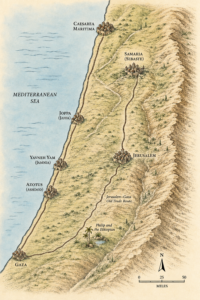
The apostles did the same. Peter preached Christ from Joel and the Psalms at Pentecost. Philip opened Isaiah and preached Jesus to the Ethiopian. Paul reasoned from the Scriptures in the synagogues. Apollos was mighty in the Scriptures. The early church did not abandon the written Word in order to bring “fresh bread.” Their preaching came from the living God and was in harmony with what God had already written.
So no, the apostles were not men without Scripture. They were men whose revelation of Christ was rooted in Scripture.
Too Much Bible Knowledge Leads to Head Knowledge and a Lack of Walking by the Spirit
This claim creates a false idea that God never intended. We are not called to choose between the Word and the Spirit. We are called to walk by the Spirit as we love, learn, obey, and proclaim the Word.
Walking by the Spirit and immersing ourselves in the Word go hand in hand. They are not at odds. The Spirit illuminates the Word, and the Word anchors us in truth. They are not opposing forces. They are designed to work in harmony.
So rather than abandoning Scripture or downplaying the Spirit, we grow by letting both shape us, keeping us balanced, grounded, and alive in faith.
Hebrews 4:12 says:
“For the word of God is living and active, sharper than any two-edged sword, piercing to the division of soul and of spirit, of joints and marrow, and discerning the thoughts and intentions of the heart.”
Of course, Bible knowledge without obedience, humility, love, or the fear of God can become pride. But the answer to dead knowledge is not less Scripture. The answer is to renew our minds to the written Word and let the Spirit bring that Word to life in us.
Jesus said:
“The words that I have spoken to you are spirit, and they are life.”
— John 6:63
The contradiction in this modern teaching is obvious. Those who say the Bible is no longer needed often pour out spiritual wisdom that came from years of being taught the Bible, studying the Bible, hearing the Bible, and meditating on the Bible. They speak from a treasury of Scripture already stored within them. Yet they turn right around and tell others they do not need that same treasury. That is not spiritual freedom. That is spiritual robbery.
If someone has been fed by the Word for years, how can that one deny that food to others? If he learned Christ through the Scriptures, how can he tell new believers they do not need the Scriptures? If the Word of God formed him, corrected him, strengthened him, and taught him to recognize the voice of God, why would he take that same Word out of the hands of others?
The written Word, the Spirit’s guidance, and the spoken Word were never in competition. They were always meant to work in harmony.
I Am Your Apostle. Come to Me, and I Will Feed You
This is the most disturbing claim of all, because it shifts the believer’s dependence away from God and his Word and places it upon a human voice.
No servant of Christ becomes the source.
The root of this is not new. It is one of the oldest religious tricks in biblical history: someone claims fresh spiritual authority while quietly moving people away from the written Word of God. Once people are moved away from Scripture, they become easier to control.
Often, a money trail appears. If the people no longer go first to the Word of God, then they must go to the person who claims to have the word for this hour. If they are told that “fresh bread” comes through that person, then that person becomes the source. And if he becomes the source, the people are expected to sustain him.
This is where spiritual language can become a cloak for covetousness. The promise sounds holy:
“Come to me, and I will feed you.”
But beneath it, too often, is another message:
“Come to me. Depend on me. Honor me. Sustain me.”
That is not the pattern of Christ. That is not the pattern of the apostles. A true servant of Christ does not make himself the fountain. He points people to the fountain. He does not make believers dependent on his private revelation. He teaches them to know the Lord, search the Scriptures, walk by the Spirit, and discern truth from error.
Peter warned about false teachers who would exploit believers. Paul warned about men who supposed that godliness was a means of gain. Jude warned about those who ran greedily in the way of Balaam. This spirit has always existed: religious authority joined to personal profit.
That is why the written Word of God is so necessary, and why it must never be separated from walking by the Spirit. How many times has God answered your prayer by bringing a specific scripture to mind as you walked by his Spirit? Our knowledge of Scripture helps us determine truth from error. It protects the sheep. It exposes the wolf.
It gives the believer something by which to test every voice, every claim, every prophecy, every teaching, and every person who says, “I am the one you need.”
The Bereans were called noble because they examined the Scriptures daily to see whether Paul’s teaching was true.
Think about that. Paul was a true apostle, yet the Bereans were praised for checking his teaching by the Scriptures. If Paul could be tested by Scripture, then no modern apostle, prophet, pastor, teacher, or minister stands above Scripture.
That is why this teaching is so dangerous. It does not merely say, “Listen to me.” It says, “You need me in a way you no longer need the Scriptures.”
That is not apostolic.
That is control.
The True Work of God
Some will say, “But what about people who cannot read? What about places where people are illiterate?”
But the answer is not to remove the Bible from them. The answer is to bring the Word of God to them in every faithful way possible.
When I was in India years ago, the gospel was being preached, and many believers had Bibles in Hindi or English and were learning to read. In fact, one woman I met had once been illiterate, but she learned to read and was now preaching from the Bible throughout towns and villages across India.
That is the true work of God. Not taking the Scriptures away from people. Not making them dependent on a self-appointed apostle. Not telling them, “Come to me, and I will feed you.”
The true servant of Christ says, “Here is the Word of God. Read it. Hear it. Learn it. Obey it. Let it dwell in you richly. Walk by the Spirit. Follow Christ. And if I can help, I am ready and willing to do so.”
God went to unimaginable lengths to preserve his Word for us. He did not leave his people at the mercy of every man who claims to have fresh bread. He gave us the Scriptures, breathed by him, profitable for teaching, reproof, correction, and training in righteousness.
And the Word of God helps us discern truth from error.
John 8:31-32 says:
“If you continue in my word, then you are my disciples indeed; and you shall know the truth, and the truth shall make you free.”
Truth is more than knowledge. It is the liberating force that sets us free from the bondage of sin, confusion, and fear. This means freedom is not just about understanding the gospel intellectually, but experiencing it daily through the life of Christ in us.
Without Scripture, every spiritual claim must be judged by personality, emotion, charisma, signs, confidence, or popularity. But with Scripture, the believer has a plumb line. The Word of God teaches us what is true, exposes what is false, and keeps us from being carried away by every wind of doctrine and every voice that claims to speak for God.
Ephesians 4:11-12. Says “And he gave some apostles; and some prophets; and some evangelists; and some pastors and teachers; For the perfecting of the saints, for the work of the ministry, for the edifying of the body of Christ.”
The figure of speech utilized in the verse above is polysyndeton. Many ands. He’s emphasizing that each gift is distinct, intentional, and equally purposed for building up the body.
This is why we need to Teach and Preach the Bible more than ever!
Gratitude,
Anthony Barber
3 Comments
Love that you spelled this out in full detail Tony. We all need to go to God and read his written word and have a relationship with him through our brother and savior Jesus Christ. It would be a very dark world without the scriptures for reference and comfort. The balance of living by the spirit is always having the heart ”it was written “ for a reason so that we could fully live it.
Hi. The devil is so limited in what he pulls! Nothing new under the sun for him! Like when the Pope was the ONLY ONE “qualified” to read the Bible and interpret it for all the rest of the “low life”!! Nope, not biting!!! When I have seen a version of that kind of thinking, I find myself wrinkling my forehead! It happens every time. Something just doesn’t sit right, and now in this article, you’ve laid it out in a clear and concise way. I was just at lunch yesterday with a new Christian friend, and we were having a great talk and remarked about the fact that in all these thousands of years, the devil has not succeeded in destroying the Bible, though he’s tried, but those who seek will find! And that’s a promise! Love you and thanks again for taking the time to explain things so clearly.
Thank you for your timeless thoughts. Those were seven of my best minutes of the year. Hebrews 4:12 is new to me, and I think you have stimulated and strengthened my inquiry and learning into God’s timeless truths as revealed in the Word.
Comments are closed.