The Timeline of Acts: From Jesus to Paul | Anthony Barbera
Anthony Barbera — May 28, 2026
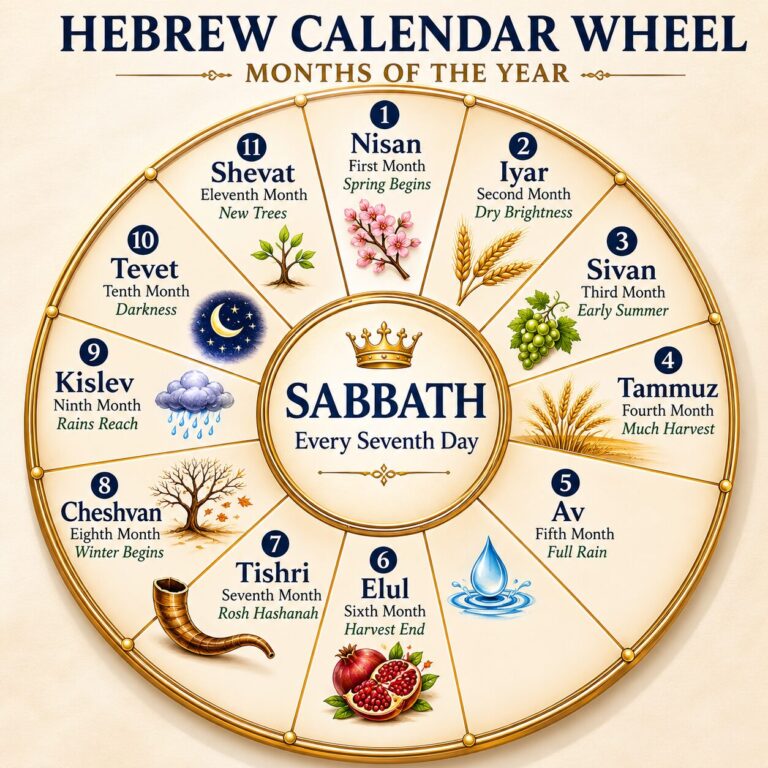
(Hebrew and Roman Months Integrated)
In preparation for writing the novel Phillip the Evangelist, Book Three of Mighty Men & Women of the Bible, it was important for me to construct as thorough and historically grounded a timeline as possible surrounding the events of the early church, the ministry of Jesus, and the historical setting of the Book of Acts.
I hope that this is helpful for your own study.
This timeline is a historical reconstruction based on biblical texts, chronological analysis, and the work of a number of historians and biblical scholars. The dates presented are not arbitrary but are based upon established historical research, ancient literary sources, Roman historical records, and widely discussed chronological models.
While the reconstruction reflects one well-supported alignment of the available evidence, alternative interpretations and timelines do exist. As they say, this chronology is not etched in stone. Rather, this is intended to present a careful and reasonable chronology based upon the best evidence presently available. It is my intention for this to be a living document; if or when new biblical knowledge emerges, there is room for change.
JESUS CHRIST— BIRTH & CRUCIFIXION
Birth of Jesus
September 11, 3 BC — Tishri
(September–October) Birth of Jesus in Bethlehem.
The date (September 11, 3 BC) is chosen based on historical context—aligning with the end of Herod’s reign—alongside astronomical insights, like the possible timing of the ‘Star of Bethlehem,’ and seasonal considerations from the Gospels.”
Early Life and Youth
Nisan, 2 BC (March–April)
- First Passover experienced by Jesus (approx. 6–7
months old)
2 BC – AD 12
- Childhood in Nazareth
Family settles in Nazareth after Herod’s death
· Jesus grows “in wisdom and stature” (Luke 2:52)
Nisan, AD 12 (March–April)
- Jesus at the Temple at age twelve (Luke 2:41–52)
- Early awareness of His divine mission
Preparation for Public Ministry
Tishri–Kislev, AD 26
(September–December)
- John the Baptist begins his ministry
- “In the fifteenth year of Tiberius Caesar” (Luke 3:1)
Late AD 26 – Early AD 27
- Baptism of Jesus.
- Approximately twenty-nine years old. (“Now Jesus himself began his ministry at about thirty years of age…”) Luke 3:23
- Holy Spirit descends; the Father’s voice affirms him
- Luke 3:23 (“about thirty”) fits this timeframe since his thirtieth birthday would not occur until September AD 28 (no year zero).
Passovers During Jesus’ Public Ministry
Ministry (Three Explicit Passovers in John’s Gospel)
This chronology recognizes only Passovers clearly identified in John, resulting in a ministry lasting roughly two to two and a half years. These Passovers refer specifically to the period of Jesus’ public ministry, as recorded in the Gospel of John
Passover #1 — Nisan, AD 27 (March–April) (John 2:13)
- Early Judean ministry
- Cleansing of the Temple
Passover #2 — Nisan, AD 28 (March–April) (John 6:4)
- Galilean phase
- Feeding of the five thousand
Final Passover — Nisan 14, AD 28 (Wednesday) (John 11:55–19:42)
- Crucifixion of Jesus as the Passover Lamb
- Age approximately 29 years old (The unnamed “feast of the Jews” in John 5:1 is not counted as a Passover in this framework.)
Key Timeline of Jesus’ Ministry and Passion
- First Passover (John 2:13) — Early ministry, Temple cleansing
- Second Passover (John 6:4) — Galilean ministry, feeding of the five thousand
- Final Passover (John 11:55) — Crucifixion as Passover Lamb on Nisan 14; AD 28 (Wednesday)
- Nisan 17 (after sunset) — Resurrection
- Nisan 18 (morning) — Tomb found empty
- Iyyar 27, AD 28 — Ascension (40 days after resurrection)
- Sivan 6, AD 28 — Pentecost, Spirit poured out
These anchors tie biblical events to historical and cultural markers,
Crucifixion, Resurrection, and Ascension
Nisan 14, AD 28 (Wednesday) — Crucifixion
Nisan 17, AD 28 (after sunset) — Resurrection (fulfills “three days and three nights”)
Nisan 18, AD 28 (early morning) — Tomb found empty
Iyyar, AD 28 (April–May) — Ascension (40 days after the resurrection)
Why I Favor an AD Chronology
Astronomical Dates for the Biblical Crucifixion
| Year | Spring Equinox (Julian) | New Moon Near Equinox | Nisan 14 (Evening Start) | Day of Week |
|---|---|---|---|---|
| AD 28 | March 23 | March 9 (visible March 10) | March 23/24 | Wednesday |
| AD 30 | March 23 | April 6 | April 6/7 | Thursday–Friday |
| AD 33 | March 23 | March 19 | April 2/3 | Friday |
The two Sabbaths below refer specifically to the Passover week—a high Sabbath associated with the feast and the regular weekly Sabbath. This distinction allows for a timeline that accommodates “three days and three nights,” which some scholars view as supporting an AD 28 chronology.
| Criterion | AD 28 (Wed) | AD 30 (Fri) | AD 33 (Fri) |
|---|---|---|---|
| Literal “three days & three nights.” |  Fits Fits |  ~36 hours ~36 hours | ~36 hours |
| Two distinct Sabbaths (John 19:31) | Clear | Compressed | Compressed |
| Tiberius’ 15th year (Luke 3:1) | Strong alignment |  Borderline Borderline | Late |
| Astronomical Wednesday Nisan 14 | Yes | Thursday | Friday |
| Within Pilate’s governorship | Yes | Yes | Yes |
Principle: Passover (Nisan 14) begins at sunset following the new moon nearest the spring equinox. Modern retro-calculations correlate the Hebrew and Julian calendars. Candidate years listed: AD 28, AD 30, AD 33. [1]
Key alignment for AD 28:
- Spring equinox (Julian): March 23
- New moon near equinox: March 9 (visible March 10)
- Nisan 14 (evening start): March 23/24
- Day of week: Wednesday
Proposed Passion timetable that coheres with AD 28:
- Last Supper — Tuesday evening (Nisan 13 → 14)
- Crucifixion — Wednesday afternoon (Nisan 14)
- Burial before sunset
- Resurrection — Saturday evening (Nisan 17 → 18)
Textual harmony points:
- Matthew 12:40 (“three days and three nights”) — literal reckoning (nights: Wed/Thu/Fri; days: Thu/Fri/Sat)
- John 19:31 — next day called a “high Sabbath” (Feast Sabbath distinct from weekly Sabbath)
- The Two Sabbaths model explains the spices purchase (Mark 16:1) and resting (Luke 23:56)
Why I prefer 28 AD over 30 AD /33 AD in this framework:
- Literal “three days & three nights” fits
- Two distinct Sabbaths clearer
- Luke 3:1 (Tiberius’ 15th year) alignment stronger
- Wednesday, Nisan 14, appears in the astronomical alignment
- Still within Pilate’s governorship
Chronological Anchors
- Nisan 14, AD 28 — Crucifixion (Wednesday)
- Nisan 17 (after sunset), AD 28 — Resurrection
- Nisan 18 (early morning) — Tomb found empty
- Iyyar 27, AD 28 — Ascension Sivan 6, AD 28 — Pentecost
———————————————————————————–
- AD 28–29 (See Appendix)
THE BOOK OF ACTS — CHAPTER-BY-CHAPTER
Authorship and purpose
The book of Acts forms the second volume of a unified work commonly called Acts. Both books were written by Luke, a companion of Paul.
In the introduction, Luke explains that his first volume described what Jesus began to do and teach. Acts continues the story by showing what Jesus continued to do through the Holy Spirit and through his followers.
Although the book is traditionally called The Acts of the Apostles, the central figure throughout the narrative is Jesus Himself. He acts directly and through the spirit, guiding the growth and mission of the early church.
Acts is the transition, the bridge, between the Old Testament and the New Testament and between the Gospels and the Epistles. In the Gospels, Jesus is the focal point. In the Epistles, first the Apostles, then the disciples. Each Great Statement builds upon the one before it, carrying the principles of the previous forward. Jesus is the one who unifies the entire Book of Acts.
The Risen King and the Promise of the Spirit
Acts opens with the risen Jesus spending forty days instructing his disciples about the kingdom of God. This connects with the message of Luke’s Gospel: Jesus is restoring God’s reign, beginning with Israel and extending to the nations.
Jesus promises that the Holy Spirit will come and empower his followers. This fulfills Old Testament prophetic hopes that God would dwell among his people in a new temple, transforming their hearts. He commissions the disciples to be his witnesses in:
- Jerusalem
- Judea
- Samaria
- The ends of the earth
His ascension in a cloud reflects imagery from Daniel, portraying his enthronement as the Son of Man who shares in God’s rule.
Pentecost and the New Temple
At Pentecost, the Spirit comes like wind and fire, echoing God’s presence in the tabernacle and Temple. The disciples speak in many languages that they didn’t know, demonstrating that God’s message is now reaching all nations. (These nations were representative of the 70 Nations in Genesis 10, scattered across the known world.
Luke presents a profound theological claim: God’s dwelling place is no longer a building but a people. The community of Jesus becomes the new Temple promised by the prophets. Thousands respond to Peter’s message, forming communities marked by generosity, worship, and shared faith in Christ.
Acts is the Transition — a bridge/fulcrum between the Old Testament & New Testament
- In the Gospels: Jesus is the focal point.
- In the Epistles: “sons of God” as “workers together with him” is emphasized.
ACTS 1 — Iyyar (28)
Dates: April 20 – May 18, 28
Season: Late Spring
Feasts: Omer counting (between Passover & Pentecost)
Events:
- Final post-resurrection instructions
- Promise of the Holy Spirit
- Ascension from the Mount of Olives
- Matthias is chosen to replace Judas
ACTS 2 — Sivan, (Pentecost/Feast of Weeks) (28)
Sivan 6, 28. Pentecost (Feast of Weeks)
Pentecost and the Birth of the Church. “Every nation under heaven.”
- Resurrection: Nisan 17, AD 28
- Ascension: Iyyar 27, AD 28 (40 days later)
- Pentecost: Sivan 6, AD 28 (50 days after resurrection)
Events:
- The Holy Spirit poured out
- Apostles speak in known languages
- Peter’s sermon. Peter taught them what had happened. Previously, he was afraid; now, he was bold.
- About 3,000 baptized
- Jerusalem church established
Peter had to teach them that this was the prophesied event, and that Jesus the Messiah was spoken of in Joel 2:28-32. God promises to pour out his Spirit on all flesh.
“And it shall come to pass afterward, that I will pour out my Spirit on all flesh; your sons and your daughters shall prophesy, your old men shall dream dreams, and your young men shall see visions. Even on the male and female servants in those days, I will pour out my Spirit… And it shall come to pass that everyone who calls on the name of the Lord shall be saved.” Joel 2:28-32
The First Great Statement (Unity) — Acts 2:47 “Praising God, and having favor with all the people. And the Lord added to the church daily such as should be saved.”
ACTS 3 — Sivan → Early Tammuz (28)
Dates: Late May – late June 28
Feasts: None
In Acts 3, Peter and John heal a man who was lame from birth at the Beautiful Gate. This miraculous sign astonishes the crowd. Peter uses the opportunity to preach about Jesus, calling the people to repent and trust in Him.
ACTS 4 — Sivan–Tammuz (28)
Feasts: None
Authority pressure rising. This man wasn’t only healed, he was made whole. This is the stone which was set at nought of you builders, which is become the head of the corner. Neither is there salvation in any other: for there is none other name under heaven given among men, whereby we must be saved. Acts 4:11-12
ACTS 5 — Tammuz (28 Early 29)
Events: You have filled Jerusalem with your doctrine. Even some of the priests believed. (5:28)
Dates: June 18 – August 14, 28 (continuing into early 29)
Feasts: None major
Conflict with Jerusalem Sanhedrin
Luke describes a contrast between two temples:
- The traditional Jerusalem temple led by religious authorities
- The new Temple, the Spirit-filled community of believers
The apostles heal, teach, and share resources to care for the poor. This reflects the Torah’s vision for the Temple’s purpose. Opposition grows as leaders arrest and threaten the apostles.
- Ananias and Sapphira judged
- Apostolic signs and healings
- Apostles imprisoned and freed by an angel
- Gamaliel advises restraint
- Acts 5:42 And daily in the Temple, and in every house, they ceased not to teach and preach Jesus Christ.
ACTS 6 — Approx Late-Summer (30-31)
Approx Year: 30–31
Feasts: None central
Atmosphere: Dispute over Greek-speaking widows. Seven were chosen to serve the widows, overseeing the daily distribution of food.
- Seven appointed (Stephen, Philip included)
- Stephen performs signs and wonders
- Stephen arrested
Second Great Statement (Establishment) — Acts 6:7
“And the word of God increased; and the number of the disciples multiplied in Jerusalem greatly; and a great company of the priests was obedient to the faith.”
ACTS 7 — Stephen’s Martyrdom (31-32)
Stephen and the First Persecution
As the movement expands, new leaders such as Stephen emerge. Stephen’s speech recounts Israel’s history of rejecting God’s messengers and culminates in his martyrdom. His death sparks widespread persecution that forces believers to scatter beyond Jerusalem. Rather than stopping the movement, persecution becomes the means by which the message spreads into Judea and Samaria.
“Scattered Abroad” The Greek word is: διασπείρω (diaspeirō)
It means:
- to scatter abroad
- to disperse
- literally “to scatter seed.”
Events: Stephen recounts Israel’s history. Accuses leaders of resisting the Holy Spirit. Stephen martyred. Saul consents to his death.
ACTS 8 — Philip in Samaria & Gaza (32)
Expansion Beyond Jerusalem
Several pivotal events transform the early community into a global movement:
- Philip’s mission in Samaria, bringing the message to former enemies of Israel.
- Saul’s conversion, turning a persecutor into a leading advocate for Jesus.
- Peter’s vision, revealing that Gentiles are welcomed into God’s people without ritual impurity.
The Spirit’s presence among Gentiles confirms that God’s kingdom extends beyond ethnic Israel.
- Season: Feasts: None central. Weather: Likely summer
Samaria hills — warm breezes - Gaza road — desert heat and glare
Great persecution scatters believers - Philip proclaims Christ in Samaria; Samaritan revival
- Peter and John confirm the work
- Philip sent south; the Ethiopian eunuch was baptized
- Philip found at Azotus; continues preaching northward
- Philip eventually resides in Caesarea
(Note: no scriptural endpoint stated for Philip’s evangelistic circuit)
ACTS 9 — Saul’s Conversion (32-33)
- Saul encounters the risen Christ on the Damascus road
- Saul converted and baptized
- Early preaching in Damascus
- Escape from Damascus
- Saul visits Jerusalem
- Peter heals Aeneas
- Peter raises Tabitha
Third Great Statement (Completeness) — Acts 9:31 (KJV)
“Then had the churches rest throughout all Judaea and Galilee and Samaria, and were edified; and walking in the fear of the Lord, and in the comfort of the Holy Ghost, were multiplied.”
ACTS 10 — AD 38–40 (Caesarea)
- Cornelius receives vision
- Peter’s vision regarding Gentiles
- Peter preaches in Caesarea
- Holy Spirit falls on Gentiles
- Gentiles baptized
ACTS 11 — AD 40 (Antioch)
The Church at Antioch
Antioch becomes the first major multi-ethnic church and a center for missionary activity. Barnabas and Paul help lead this diverse community, and believers are first called Christians there. From Antioch, the message begins to spread intentionally across the Roman world.
Peter goes to Jerusalem to tell the Apostles what’s been happening.
Peter explains Gentile inclusion
- Church affirms God’s work
- Antioch becomes a major center
- Believers first called Christians
- Prophecy of famine by Agabus
Fourth Great Statement (World) — Acts 11:21 (KJV)
“And the hand of the Lord was with them: and a great number believed, and turned unto the Lord.”
ACTS 12 — Nisan, AD 44
Dates: Mar–Apr AD 44
Feasts: Passover · Unleavened Bread · First Fruits
Atmosphere: Celebration mixed with persecution
Events:
- Herod Agrippa I executes James
- Peter imprisoned and miraculously freed
- Herod struck down and dies
Fifth Great Statement (Grace) — Acts 12:24 (KJV)
“But the word of God grew and multiplied.”
ACTS 13 — Spring, AD 47
Feasts: Possibly Passover context
Atmosphere: The first missionary journey begins
Events:
- Holy Spirit commissions Paul and Barnabas to go to Seleucia and from there to Cyprus.
- First missionary journey begins
- Cyprus evangelized
- Elymas confronted
- Sermon in Pisidian Antioch
ACTS 14 — AD 48
Events:
- Ministry in Iconium and Lystra
- Healing of the crippled man
- Paul mistaken for a god
- Paul stoned and survived
- Churches strengthened; elders appointed
ACTS 15 — AD 49 (Jerusalem Council)
The Jerusalem Council
A major debate arises concerning Gentile believers. Some insist that they must adopt Jewish practices such as circumcision and dietary laws. At a council in Jerusalem, Peter, Paul, and James affirm that God’s covenant now includes the nations through faith in Jesus, rather than by ethnic identity. Gentile believers are asked to avoid pagan practices but are not required to follow the full Torah.
This decision shapes the future of the Christian movement as a multi-ethnic family united by faith rather than cultural background.
Atmosphere: Debate leading to unity
Events:
- Circumcision controversy
- Jerusalem Council convened
- Salvation affirmed by grace
- Letter sent to Gentile churches
- Paul and Barnabas part ways
ACTS 16 — AD 49–50
Atmosphere: Expansion into Europe
Events:
- Timothy joins Paul
- Macedonian vision (Northern Greece considered Europe)
- Lydia converted
- Imprisonment in Philippi
- Earthquake; jailer converted
Sixth Great Statement (Human / Growth) — Acts 16:5 (KJV)
“And so were the churches established in the faith and increased in number daily.”
ACTS 17 — AD 50
Events:
- Ministry in Thessalonica
- Berean examination of Scripture
- Paul in Athens
- Areopagus address
ACTS 18 — AD 50–52
Events:
- Ministry in Corinth (18 months)
- Aquila and Priscilla introduced
- Paul before Gallio
- Return toward Antioch
ACTS 19 — AD 52–55
Events:
- Extended ministry in Ephesus
- Extraordinary miracles
- Magic renounced
- Riot over Artemis worship
Seventh Great Statement (Spiritual Perfection) “So mightily grew the word of God and prevailed.” Acts 19:20
ACTS 20 — AD 55–57
Events:
- Macedonia and Greece revisited
- Eutychus raised from the dead
- Farewell address to Ephesian elders
ACTS 21 — Sivan, AD 57 (Philip’s House)
Dates: May–Jun AD 57
Feast: Pentecost season again
Atmosphere: Mature Philip; prophetic tension
Events:
- Paul returns to Jerusalem for Pentecost
- Stay with Philip the Evangelist in Caesarea
- Agabus foretells Paul’s arrest
- Paul arrested at the Temple
ACTS 22–26 — AD 57–59 (Trials)
Events:
- Paul addresses the crowd; testimony of conversion
- Roman citizenship asserted
- Sanhedrin hearing
- Assassination plot uncovered
- Paul transferred to Caesarea
- Paul before Felix; judgment delayed; continued imprisonment
- Festus succeeds Felix; Paul appeals to Caesar
- Paul testifies before Agrippa
ACTS 27 — Tishri–Kislev, AD 59
Events:
- Voyage to Rome
- Severe storm
- Shipwreck near Malta
ACTS 28 — AD 60–62 (Winter on Malta; then Rome)
Events:
- Winter in Malta
- Arrival in Rome
- Paul is under house arrest
- Gospel proclaimed freely
Final notes included:
- Great Fire of Rome — AD 64
- Neronian persecution — AD 64–68
- Probable martyrdom window for Peter and Paul
Appendix A — Astronomical Dating of the Crucifixion
AD 28–29 is an accurate and widely accepted date range for the “15th year of Tiberius” referenced in Luke 3:1, when John the Baptist’s ministry began (shortly before Jesus’ own ministry).
Tiberius became Roman emperor upon the death of Augustus on August 19, AD 14, with his position formally confirmed by the Senate around September 17–18, AD 14. His reign is standardly dated from AD 14 to AD 37.
The calculation of his “15th year” depends on ancient regnal counting practices, which varied slightly by region, calendar (e.g., Roman, Syro-Macedonian, or Jewish-inclusive methods), and whether years were reckoned from the exact accession date or from the following January 1 (common in some Roman contexts). Most scholars and historical analyses place the 15th Year as follows:
If counting from the accession in late AD 14 (or from January 1, AD 15), the 15th Year typically begins in late AD 28. It extends into AD 29 (e.g., from around August/September AD 28 to late AD 29).
Some sources narrow it to AD 28–29 or specifically AD 29, with the earliest possible start in August AD 28 and the latest end in December AD 29.
This range aligns with the consensus in biblical scholarship, historical studies, and sources like Midwestern Baptist Theological Seminary analyses, Catholic Answers discussions, and various chronological studies of the New Testament. Minority views propose earlier dates (e.g., AD 26–27 or AD 27, sometimes tied to co-regency periods with Augustus around AD 11–13). Still, these lack strong support from contemporary Roman literary, numismatic (coin), and inscriptional evidence, which consistently start Tiberius’ sole reign in AD 14.
Although we cannot be 100% sure, AD 28–29 is therefore accurate and reflects a scholarly view for dating the start of John the Baptist’s ministry in Luke’s Gospel. This is often used to anchor broader timelines for Jesus’ ministry (typically beginning shortly after, around age 30 per Luke 3:23) and crucifixion (commonly AD 30 or AD 33).
Explore the World Behind the Chronology
This historical chronology also serves as background research for Anthony Barbera’s biblical historical novels, including
Elijah: Fire from Heaven, part of the Mighty Men & Women of the Bible series.
© 2026 Anthony Barbera — All Rights Reserved
This material may not be reproduced or reposted without written permission from the author.